Appendix: Further References
As mentioned previously,
here is a list of additional Islamic references which demonstrate that the terms used
in the hadiths that we sourced prove beyond any reasonable doubt that Muhammad was
wearing the clothes, robes, dresses of his wives.
Our dear brother Dimitrius compiled and translated
all of the following quotes, may the risen Lord Jesus richly bless him and his
family.
All red, bold, capital and underline parts will be
our emphasis.
______________________________________________________________________________
Tuhfatu Al-Ihwathy written by Mubar Kafoury
The Section of Gathering, chapter of
The detestation of praying in womens coverings
It was narrated by Muhammad ibn Abd Al-Ala,
narrated by Khalid ibn Al-Harith, narrated by Ashat ibn Abdel Malik, narrated
by Muhammad ibn Sirin, narrated by Abdallah ibn Shafiq, narrated by Aisha who
said, The prophet did not pray in his wives coverings (Luhuf).
Abu Issa related that this is a true and correct
hadith. It was narrated about the prophet that he also gave exception to this.
Commentary: The saying, did not pray in his wives
coverings (Luhuf), is also found in the narration of Abu Dawud as in
our shirina or luhufina which shows doubt on the part of the
narrator. The hadith shows the legitimacy of avoiding WOMENS CLOTHES that are
thought to have been defiled (by womens emissions) as well as all other
clothing that are feared likewise
As for his saying It was narrated about the prophet
also gave exception to this, this was in reference to Aishas hadith, I was
with the prophet and on us was our shiaar and above it we threw on a kisa.
When the prophet woke up the next morning, he took the kisa AND WORE IT
and went out and prayed the
THAWB
القاموس
المحيط،
الإصدار 2.01 -
للإمام
الفيروزآبادي
باب الباء >>
فَصْلُ
الثَّاء
والثَّوْبُ:
اللِّباسُ،
ج: أَثْوُبٌ
وأَثْؤُبٌ
وأَثْوَابٌ
وثِيَابٌ،
Al-Muheet Dictionary written by Imam
Al-Kayrawani Abadi
Chapter of the letter Ba, Section of
the Letter Tha
Thawb: Clothing
Plural: Athwab, Athwaab and
Thiyab
لسان
العرب،
الإصدار 2.02 - لابن
المنظور
الإفريقي.
المجلد الأول
>> (ب) >> حرف
الباء
الموحدة >>
فصل الثاء
المثلثة
والثَّوْبُ:
اللِّباسُ،
واحد
الأَثْوابِ، والثِّيابِ،
والجمع أَثْوُبٌ،
وبعض العرب
يهمزه فيقول:
أَثْؤُبٌ،
لاستثقال
الضمة على
الواو،
والهمزةُ
أَقوى على
احتمالها
منها، وكذلك
دارٌ
وأَدْؤُرٌ
وساقٌ
وأَسْؤُقٌ،
وجميع ما جاءَ
على هذا
المثال.
From the Tongue
of the Arabs (Lisan al-Arab) by Ibn
Al-Manthour al-Ifriki
Volume One, Entry
of the letter Ba in singular, subsection the letter Tha in triplicate
Thawb: Clothing (Libas).
Singular is Athwab. Plural is Athwaab and Thiyab.
Some Arabs add a hamza to
pronounce it Athwabun
النهاية في
غريب الحديث
والأثر.
الإصدار 2.04 - للإمام
ابن الأثير
المجلد الأول
>> حرف الثاء >>
باب الثاء مع
الواو
وفيه <مَن
لَبس ثوب
شُهْرةٍ
ألْبَسه
اللّه ثَوْب
مَذَلّة> أي
يَشْمله
بالذُّل كما
يَشْمل الثَّوبُ
البَدَن، بأن
يُصَغِّره في
العيون ويُحَقِّره
في القلوب.
The End in the Strange
Hadith written by Imam Ibn Al-Athir
Volume One, chapter of the
letter Tha, entry of letter tha followed by the letter wow
Thawb is a gown or garment.
For it is said He who wears a gown (thawb) of fame, Allah will clothe
him with a gown (thawb) of humiliation, meaning he will be completely
covered with humiliation just as a thawb completely covers the body
مفردات
ألفاظ القرآن.
الإصدار 2.03 -
للأصفهاني
نص القَاموس
بُرْد: ثَوْب
gown, garment
Meaning of the Nouns Pronounced in the Koran written by
Al-Asfahani
Burd is a Thawb which is a gown or garment.
مفردات
ألفاظ القرآن.
الإصدار 2.03 -
للأصفهاني
نص القَاموس
بـِزّة: ثَوْب،
ثِيَاب
Uniform; suit; costume; dress; clothes, clothing, apparel, attire
______________________________________________________________________________
Meaning of the
Nouns Pronounced in the Koran written by Al-Asfahani
Dictionary
Section
Singular Thawb and plural
Thiyab means uniform; suit; costume; dress; clothes, clothing, apparel, attire.
مفردات
ألفاظ القرآن.
الإصدار 2.03 -
للأصفهاني
نص القَاموس
ثَوْب garment; dress, gown, robe; costume, suit; cloth,
fabric, material; garb, cloak, guise, covering, external appearance
ثِيَاب clothes, clothing, attire, garments, apparel
______________________________________________________________________________
Meaning of the
Nouns Pronounced in the Koran written by Al-Asfahani
Dictionary
Section
Thawb in the singular ثَوْب means
garment; dress, gown, robe; costume, suit; cloth, fabric, material; garb,
cloak, guise, covering, external appearance
Thiyab in the plural ثِيَاب is
clothes, clothing, attire, garments, apparel
الجامع
لأحكام القرآن،
الإصدار 2.02 -
للإمام
القرطبي
الجزء 7 من
الطبعة >>
سورة الأعراف
>> الآية: 31 {يا بني
آدم خذوا
زينتكم عند كل
مسجد وكلوا
واشربوا ولا
تسرفوا إنه لا
يحب
المسرفين}.
دلت الآية على
وجوب ستر
العورة كما
تقدم. وذهب
جمهور أهل
العلم إلى
أنها فرض من
فروض الصلاة.
وقال الأبهري:
هي فرض في
الجملة، وعلى
الإنسان أن
يسترها عن
أعين الناس في
الصلاة
وغيرها. وهو
الصحيح لقوله
عليه السلام
للمسور بن مخرمة:
(ارجع إلى
ثوبك فخذه ولا
تمشوا عراة).
أخرجه مسلم.
وذهب إسماعيل
القاضي إلى أن
ستر العورة من
سنن الصلاة،
واحتج بأنه لو
كان فرضا في
الصلاة لكان
العريان لا
يجوز له أن
يصلي لأن كل
شيء من فروض
الصلاة يجب
الإتيان به مع
القدرة عليه،
أو بدله مع
عدمه، أو تسقط
الصلاة جملة،
وليس كذلك.
قال ابن
العربي: وإذا
قلنا إن ستر
العورة فرض في
الصلاة فسقط ثوب إمام
فانكشف دبره
وهو راكع فرفع
رأسه فغطاه أجزأه
قاله ابن
القاسم. وقال
سحنون: وكل من
نظر إليه من
المأمومين
أعاد. وروي عن
سحنون أيضا:
أنه يعيد
ويعيدون لأن
ستر العورة
شرط من شروط
الصلاة، فإذا
ظهرت بطلت
الصلاة. أصله
الطهارة. قال
القاضي ابن
العربي:
Compendium of the
Law of the Koran written by Imam Al-Qurtubi
Volume seven,
Sura number 7 Araf verse 31 O Children of Adam! Wear your beautiful apparel at
every time and place of prayer: eat and drink: but waste not by excess, for
Allah loveth not the wasters.
This verse shows the
necessity of covering genitals awra. A group of those with knowledge
stated that it is one of the obligations of prayer
This is correct as the
prophet said to Miswar ibn Makhrama, Return to your garment (thawb),
take it and no longer walk naked, as narrated by Muslim
Ibn Al-Arabi said, If we
say that covering the genitals (awra) is one of the obligations for
prayer and an imams cloak (thawb) falls
off while he is prostrating and his anus is revealed, then as Sahnoon stated,
both the imam and anyone who looked at the imams anus must repeat the prayer
جامع
البيان عن
تأويل آي
القرآن.
الإصدار 1.13 - للإمام
الطبري
الجزء الثاني
>> سورة
البقرة >>
القول في تأويل
قوله تعالى:
{هن لباس لكم
وأنتم لباس
لهن}
يعني تعالى
ذكره بذلك:
نساؤكم لباس
لكم، وأنتم
لباس لهن.
فإن قال قائل:
وكيف يكون
نساؤنا لباسا
لنا ونحن لهن
لباسا
واللباس إنما
هو ما لبس؟
قيل: لذلك
وجهان من المعاني:
أحدهما أن
يكون كل واحد
منهما جعل لصاحبه
لباسا،
لتخرجهما عند
النوم
واجتماعهما في
ثوب
واحد
وانضماها جسد
كل واحد منهما
لصاحبه بمنزلة
ما يلبسه على
جسده من
ثيابه، فقيل
لكل واحد
منهما هو لباس
لصاحبه، كما
قال نابغة بني
جعدة:
إذا ما الضجيع
ثنى عطفها
تداعت فكانت
عليه لباسا
Compendium to the
commentary of the verses of Koran written by Imam Al-Tabari
Volume 2, Chapter
of Sura 2 Al Bakara,
Verse 187 Permitted to
you, on the night of the fasts, is the approach to your wives. They are your
garments and ye are their garments.
If one asks How can our women become garments (libasan) to us and we become garments (libasan) to them when a garment is something that is worn? The response is there are two meanings. One of them is that each person has become a garment to his partner, to be worn at sleep time and when they come together in one thawb and their bodies are joined to each other in the same way that a person wears clothes (thiyab) on his body.
جامع
البيان عن
تأويل آي
القرآن.
الإصدار 1.13 - للإمام
الطبري
الجزء السابع
>> سورة
المائدة >>
القول في تأويل
قوله تعالى:
{أو كسوتهم}
9728 - حدثت عن
الحسين بن
الفرج، قال:
سمعت أبا معاذ
الفضل بن
خالد، قال:
ثنا عبيد بن
سلمان، قال:
سمعت الضحاك
يقول في قوله:
{أو كسوتهم} قال:
الكسوة لكل
مسكين: رداء
وإزار، كنحو
ما يجد من
الميسرة
والفاقة. وقال
آخرون: بل عنى
بذلك: كسوتهم: ثوب
جامع،
كالملحفة
والكساء
والشيء الذي
يصلح للبس
والنوم. ذكر
من قال ذلك:
Compendium to the
commentary of the verses of Koran written by Imam Al-Tabari
Volume 5, Chapter
of he table,
Verse 89 or clothe them kiswa-tihim.
Kiswa from kisaa
is for every poor person. A kisa is a cloak and what a person wraps
around them as he is able to afford. Other said, rather Kiswa means thawb
such as a cover. The kisa is something that may be worn to sleep in.
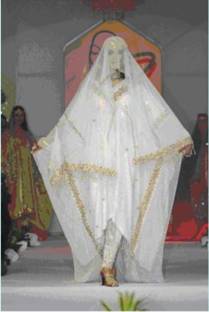
Al-Katabi said: the murhal is something that is striped.
An unsown striped kisaa (mirt, thawb) worn
ONLY BY WOMEN as used. This is an example of one worn by women in the Indian
subcontinent.
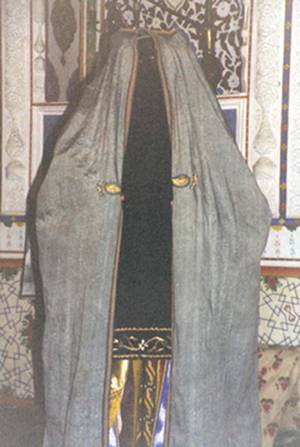
Al-Nudair said: It is only a cloak, worn by women ONLY and is green in
color. An unsown Kisaa (mirt, thawb) used in the 19th century worn
by women only.
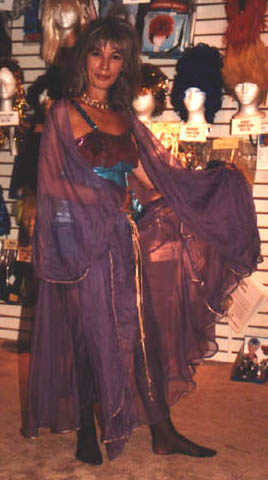
A
model displaying modern Kisaa, unsown thawb worn by women only.
Ihram
Muslim clothing worn during Hajj pilgrimage. Ihram is the distinctive garb of
the male pilgrim worn during Umra or Hajj. It consists of two pieces of white,
plain and unsown cloth. One of the pieces (izaar) is
wrapped around the midriff to cover his body from just above his navel to his
ankles, and the other (reda)
is draped around his shoulders to cover the upper body.
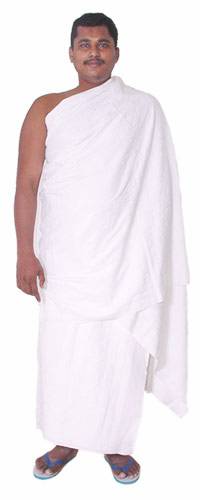
Un-sewn garments are very
familiar to Muslims. Today, they are specifically used for clothing purposes.
These cloths are NOT used as towels to dry the body or blankets to sleep under;
they are specifically used for clothing.
Responses to Jalal Abualrub
Articles by Sam Shamoun
Answering Islam Home Page